
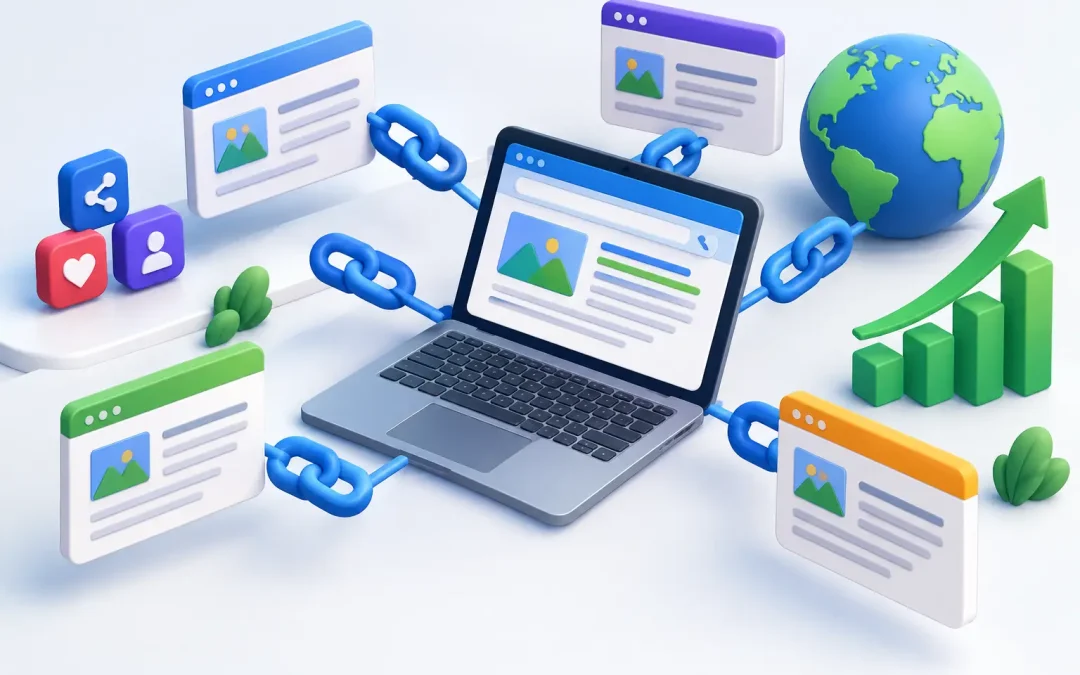
A great website can still struggle to rank if no credible source outside it signals that the business deserves attention. So, what is off page SEO? It is the work done beyond your own website to build authority, trust, relevance and visibility in search results. For businesses competing for valuable local enquiries or eCommerce sales, it is often the difference between publishing good content and earning the visibility that content deserves.
Off-page SEO is best known for link building, but links are only one part of the picture. It also includes accurate business listings, digital PR, brand mentions, reviews, community participation and the wider signals that help search engines understand whether a business is established, respected and relevant to a topic or location.
What Is Off Page SEO and Why Does It Matter?
Search engines aim to return results that are useful and credible. On-page SEO helps them interpret a page: its topic, structure, content quality, internal links and technical health. Off-page SEO provides external evidence. When relevant websites, publications, suppliers, professional bodies or customers refer to your brand, those signals can support the case that your business is a trustworthy result.
Think of it as reputation building with a search performance purpose. A backlink from a respected industry publication can introduce referral traffic, strengthen brand recognition and potentially improve a page’s ability to compete in organic search. A consistent Google Business Profile and reputable directory citations can reinforce local relevance. Genuine reviews can influence whether a searcher chooses you once you appear.
The commercial value is clear: stronger off-page signals can help support rankings for competitive terms, bring visitors directly from third-party sites and improve confidence at the point of decision. However, off-page SEO is not a shortcut. It works best when it supports a useful website, clear service offering and strong conversion journey.
The Core Elements of Off-Page SEO
Backlinks and link authority
A backlink is a link from another website to yours. Search engines may treat high-quality backlinks as endorsements, particularly when they come from sites that are relevant to your industry and have earned genuine trust themselves.
Quality matters far more than volume. A small number of editorial links from respected, relevant websites can be considerably more valuable than hundreds of low-quality links from unrelated blogs, link farms or automated directories. The ideal link profile grows naturally over time and reflects the way real people discover, discuss and recommend a business.
Relevance is central. A Sydney architecture firm receiving a mention from a design publication, a local business journal or an industry association makes sense. The same firm acquiring links from unrelated overseas coupon sites does not create the same level of credibility. Search engines evaluate context, not just raw link counts.
Brand mentions and digital PR
Your business may be mentioned online without receiving a clickable link. While an unlinked mention is not equivalent to a backlink, it can still increase awareness, create referral opportunities and contribute to a credible wider digital presence.
Digital PR creates these opportunities through genuinely newsworthy activity. Original research, local market commentary, expert quotes, community partnerships, product innovations and useful data can give journalists, publishers and industry websites a reason to feature your business. The strongest campaigns are built around something worth discussing, not a request for coverage with no substance behind it.
For established brands, PR can also protect competitive advantage. If your experts are regularly cited in relevant conversations, prospects encounter your brand before they begin comparing providers. That familiarity can lift click-through rates and lead quality, even where the immediate SEO effect is difficult to isolate.
Local citations and business information
For businesses serving defined areas, local citations are a practical off-page foundation. A citation is an online reference to your business name, address and phone number, often in business directories, industry portals, map platforms or local chambers of commerce.
The details must be consistent. Variations in your address, phone number, trading name or opening hours create confusion for customers and may dilute local trust signals. This becomes particularly important for multi-location businesses, trades, professional services and retail operators that depend on map visibility and nearby searches.
Not every directory is worth pursuing. Prioritise recognised Australian directories, reputable industry platforms and genuine local resources. A clean, accurate citation profile is more valuable than widespread listings on poor-quality sites.
Reviews and reputation
Reviews are primarily a customer trust asset, but they also have SEO implications, especially for local search. A steady pattern of authentic, detailed feedback can help prospective customers assess your service quickly. Responses matter too. Professional replies to positive and negative reviews show that a business is accountable and engaged.
Never buy reviews or pressure customers into leaving misleading feedback. Besides undermining trust, artificial review activity can breach platform rules and create reputational damage that outweighs any short-term gain. The sustainable approach is straightforward: deliver a reliable service, ask satisfied customers at an appropriate time and make the process easy.
Social visibility and content distribution
Social signals are not a simple rankings lever, but social channels can extend the reach of content that earns links, mentions and visits. A well-researched guide, useful tool, customer story or original data set is more likely to gain traction when it is actively shared with the right audience.
Distribution is particularly helpful for startups and growing businesses that have not yet built strong brand recognition. It gives your content a path to journalists, partners, customers and industry voices who may choose to reference it. The objective is not to post for the sake of activity. It is to put genuinely useful material in front of people who can act on it.
What a White-Hat Off-Page SEO Strategy Looks Like
White-hat off-page SEO earns authority rather than manufacturing it. It starts with a clear assessment of your market, current backlink profile, competitors and pages that are commercially important. A local plumber and a national eCommerce retailer need different approaches because their audiences, search results and conversion paths are different.
From there, the work may include creating link-worthy resources, securing relevant editorial placements, improving citations, reclaiming lost or incorrect mentions and developing partnerships that create real mutual value. Anchor text also needs careful management. A healthy profile includes natural variation, such as branded terms, URLs and contextual phrases, rather than repeated keyword-heavy links that appear engineered.
Campaign reporting should connect activity to outcomes. The number of links earned is useful, but it is not the final measure of success. Review referring domains, relevance, referral traffic, rankings for priority terms, organic leads, revenue and conversion rate. A link that sends qualified visitors or supports a high-value service page may be worth more than several links with impressive-looking domain metrics but no commercial relevance.
What to Avoid
Some off-page tactics can produce a temporary spike, but they create unnecessary risk. Buying bulk backlinks, using private blog networks, excessive reciprocal linking, automated directory submissions and keyword-stuffed anchor text are common examples. They may leave a footprint that search engines identify as manipulative.
The cost is not only a potential ranking drop. Poor links can distort reporting, waste budget and make future recovery work harder. If a previous provider built questionable links, a backlink audit can identify patterns that need further investigation. In serious cases, recovery may require outreach, link removals and a carefully considered disavow process.
There is also a strategic trade-off in chasing authority alone. A link-building campaign cannot compensate for slow pages, thin service content, weak product pages or an enquiry process that creates friction. Off-page SEO performs best as part of an integrated program that includes technical optimisation, content marketing, local SEO and conversion rate optimisation.
How Long Does Off-Page SEO Take?
Authority compounds over time. A new campaign may secure early placements or improve citation accuracy within weeks, but ranking improvements commonly take months to become meaningful, particularly in competitive markets. Search engines need time to crawl new references, evaluate their context and reassess where pages belong in search results.
The pace depends on your starting point, competitor strength, site quality, industry, content assets and the authority of the websites that mention you. Consistent, relevant activity is more dependable than a short burst of low-value links. For businesses with ambitious growth targets, off-page SEO should be treated as an ongoing investment in market credibility rather than a one-off task.
The most valuable external signals are the ones you would still want if search engines did not exist: a respected publication featuring your expertise, a customer recommending your service, a local directory accurately listing your business, or an industry partner sending qualified visitors your way. Build that kind of presence consistently, and your search visibility has a far stronger foundation to grow from.