
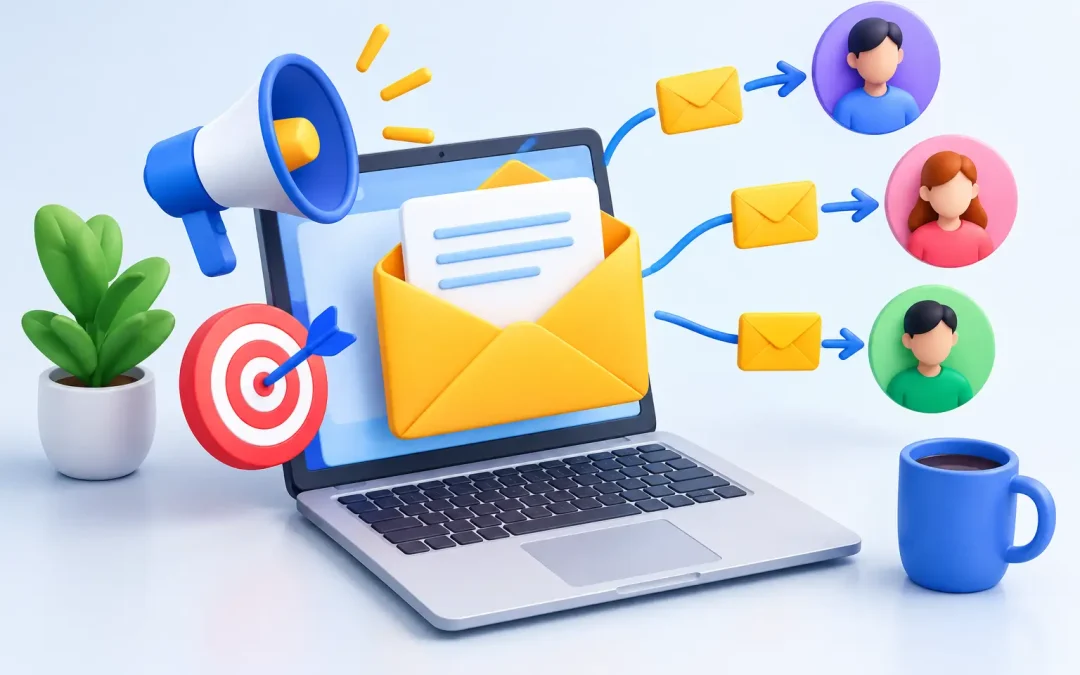
A customer visits your website, compares a few options, then leaves without enquiring or buying. That does not have to be the end of the conversation. Email gives your business a direct, measurable way to stay useful and visible while that prospect decides.
So, what is email marketing and how does it work? It is the use of permission-based emails to build relationships, guide prospects towards a decision and encourage existing customers to return. Unlike a social post that may disappear from a feed or a paid ad that stops when the budget runs out, a well-managed email list is an audience your business can communicate with directly.
For Sydney businesses, eCommerce operators and growth-focused marketing teams, email marketing works best as part of a wider digital strategy. SEO attracts high-intent traffic, paid media creates immediate demand, and email helps convert and retain the people who have already shown an interest.
What email marketing actually does for a business
Email marketing is not simply sending a monthly newsletter to everyone in a database. It is a structured communication channel that uses customer data, relevant content and clear calls to action to move people through the buying journey.
A local service business might send a useful follow-up after someone downloads a guide, then share a case study and invite them to book a consultation. An online retailer may remind a customer about an abandoned cart, recommend complementary products after purchase and offer early access to a new collection. The tactics differ, but the commercial purpose is the same: turn attention into qualified leads, sales and customer value over time.
Its strength is relevance. People are more likely to open, read and act when the message reflects what they need, where they are in the buying process and what they have previously done on your website. Sending the same promotion to every contact is fast, but it often reduces engagement and can damage trust.
How does email marketing work from sign-up to sale?
The process begins with consent. A person voluntarily gives you their email address through a website form, checkout, consultation request, event registration or lead magnet. In Australia, businesses must handle personal information carefully and comply with the Spam Act 2003. That means obtaining consent, identifying your business clearly and including a functional unsubscribe option in commercial emails.
Once a contact joins your list, an email platform stores their details and tracks interactions such as opens, clicks, purchases and form submissions. This information can be used to organise contacts into meaningful groups and trigger messages automatically.
For example, a prospective client who requests an SEO analysis could receive a confirmation email immediately. Two days later, they may receive practical information about technical website issues that limit rankings. A week later, a focused case study can demonstrate how a tailored campaign improved qualified traffic or conversions. If they book a meeting, the system should stop the introductory sequence and move them into a more appropriate communication path.
This is automation, but it should not feel automated. The strongest email programs anticipate sensible customer questions and provide timely answers. They do not pressure every subscriber with the same hard sell.
The core elements of an effective campaign
Every email needs a reason to exist. The subject line earns attention, the opening makes the message feel relevant and the body provides a clear benefit. The call to action then tells the reader what to do next, whether that is viewing a product category, reading a resource, booking a call or completing a purchase.
Design matters, particularly on mobile, but clarity matters more. Use a recognisable sender name, easy-to-scan copy and a single primary action where possible. A beautifully designed email with no clear commercial purpose will rarely outperform a simple message that solves a real customer problem.
Timing also depends on the audience. A weekly retail offer may be appropriate for customers who have asked to hear about new products. For a B2B service provider with a longer sales cycle, fewer and more useful emails may produce better engagement. There is no universal send frequency. Monitor performance, listen to unsubscribes and adjust accordingly.
List building: quality beats volume
A large list is not automatically a valuable list. Ten thousand disengaged contacts are less useful than 500 people who genuinely want to hear from your business. Purchased lists are especially risky: they lack meaningful consent, produce poor engagement and can harm your sender reputation.
Build your list through value-led offers. This could be a practical checklist, a quote request, an industry report, a webinar registration, a VIP product launch list or useful post-purchase updates. Be clear about what subscribers will receive and how often. When expectations are set properly, trust begins before the first campaign is sent.
Your sign-up forms should be easy to find without obstructing the website experience. Ask only for the information you genuinely need at first. An email address may be enough for an initial newsletter; additional details can be collected later through preference centres, progressive forms or customer behaviour.
Segmentation and personalisation drive better results
Segmentation means dividing your audience based on shared characteristics or actions. Common segments include location, industry, purchase history, pages visited, average order value, lead source and engagement level. Personalisation uses that information to make content more relevant.
For an eCommerce business, customers who buy skincare should not receive irrelevant promotions for automotive accessories. For a professional services firm, a startup founder may need different information from an established marketing manager comparing agencies. These distinctions help your business speak to the customer’s actual priorities.
There is a trade-off. Highly detailed segmentation can improve relevance, but it also takes more planning, cleaner data and stronger content production. Start with the segments that materially affect your sales process. New leads, active customers, repeat purchasers and disengaged subscribers are often enough to create a meaningful improvement.
The email automations worth setting up first
Automated journeys create consistency without requiring someone to manually send every message. They are particularly valuable when internal marketing capacity is limited. The best starting point depends on your business model, but several automations commonly deliver value:
- A welcome sequence that introduces your business, sets expectations and guides a new subscriber to a useful next step.
- An enquiry follow-up that reinforces the value of your service and helps prospects progress towards a consultation or quote.
- An abandoned cart sequence for eCommerce stores, using a timely reminder and relevant product information rather than an immediate discount every time.
- A post-purchase sequence that confirms the order, provides support, requests feedback and encourages repeat buying when appropriate.
- A re-engagement sequence that asks inactive subscribers whether they still want to hear from you, protecting list quality and deliverability.
Discounts can work, but they should not become the only lever. If customers learn to wait for a coupon, you may protect short-term revenue at the expense of margin and brand value. Educational content, product guidance, exclusivity and useful service reminders can be just as persuasive.
Measuring email marketing performance
Email marketing is measurable, but open rates alone do not tell the full story. Privacy changes can make opens less reliable, so commercial metrics deserve greater attention: click-through rate, conversion rate, revenue per recipient, leads generated, repeat purchase rate, unsubscribe rate and customer lifetime value.
Track what happens after the click. If an email generates substantial traffic but few enquiries, the issue may be the landing page, offer, pricing or conversion path rather than the email itself. This is where email, website optimisation and analytics should work together.
A disciplined test-and-refine process produces better results than constant reinvention. Test one meaningful variable at a time, such as the subject line, offer, send time or call to action. Keep a record of outcomes, then use the findings to improve the next campaign. Transparent reporting should show not only activity, but the contribution email makes to leads, sales and retention.
Common mistakes that limit results
The most common mistake is treating email as a broadcast tool rather than a customer channel. Over-mailing promotions, writing vague subject lines, ignoring mobile users and sending irrelevant content can quickly train subscribers to ignore you.
Another issue is weak technical setup. Authentication, clean contact data and regular list hygiene help protect deliverability. If your emails regularly land in junk folders, even excellent offers cannot perform. Removing hard bounces and inactive contacts may reduce headline list size, but it usually improves the quality of your reporting and sender reputation.
Finally, do not separate email from the rest of your marketing. Search campaigns reveal what people are actively looking for. Paid media identifies offers that attract response. Website analytics shows where users hesitate. These insights can inform better email content, while email behaviour can reveal the services, products and messages most likely to convert.
Email marketing rewards businesses that earn attention rather than demand it. Start with a clear promise, useful communications and a measurable next step, then keep improving from real customer behaviour. Done well, each email becomes a practical opportunity to build trust and create the next valuable conversation.