
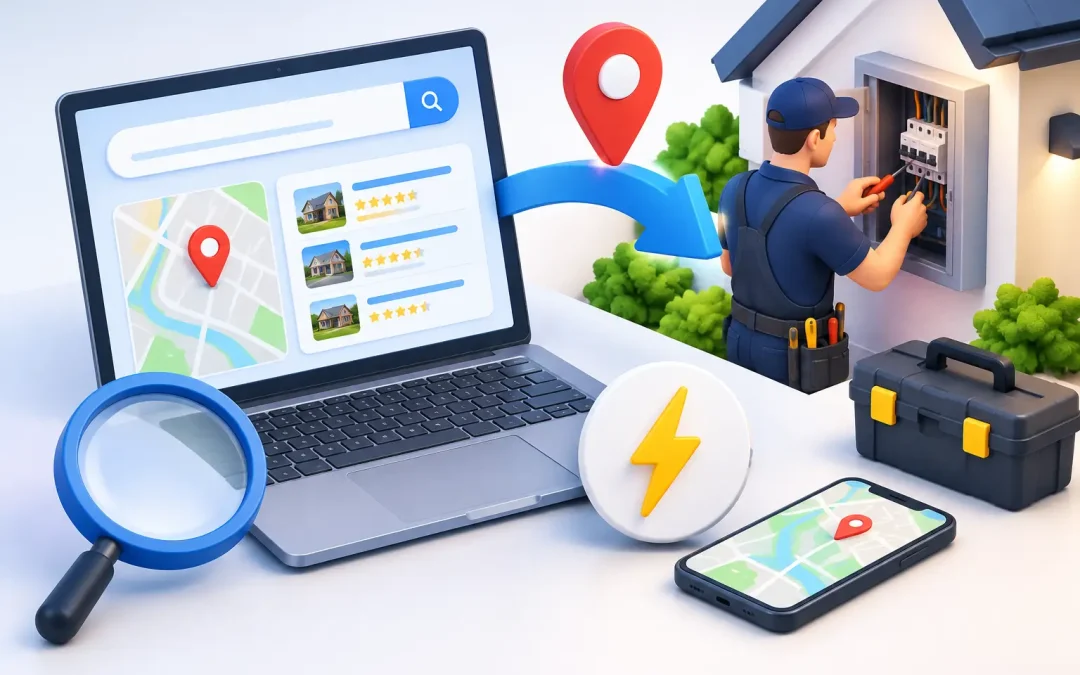
A homeowner with a tripping switchboard is not browsing for inspiration. They are searching for an electrician who appears credible, local and available. Effective electrician SEO puts your business in front of that customer at the moment a job needs to be booked – not after they have already called three competitors.
For electrical contractors, search visibility is a commercial asset. It can create a steadier flow of switchboard upgrades, emergency call-outs, EV charger installations, rewiring projects and commercial maintenance enquiries. But ranking alone is not the goal. The right strategy needs to attract the jobs you want, in the suburbs you serve, and convert that attention into phone calls and quote requests.
What electrician SEO needs to achieve
Electrician SEO is the ongoing work of improving your visibility in Google’s organic results and local search features. It brings together website performance, local relevance, service-focused content, authority and conversion optimisation. A strong campaign does not chase broad traffic for its own sake. It focuses on prospective customers with a clear need and genuine capacity to engage.
That distinction matters. Ranking for “electrical advice” may produce visits, but ranking for “Level 2 electrician Inner West” or “emergency electrician near me” is far more likely to produce a valuable enquiry. The best keyword opportunities sit where search demand, service capability, location and job value meet.
For many electrical businesses, local results are the main battleground. Google considers proximity, relevance and prominence when deciding which providers to show in map results. You cannot control how close a searcher is to your business, but you can strengthen the evidence that your company is relevant, established and trusted in its service area.
Build a website around high-intent services
A generic website with one short services page gives Google limited context and gives customers little reason to choose you. Each core service deserves a clear, useful page that explains what you do, who it is for, where you work and how a customer can take the next step.
A residential electrician may need dedicated pages for safety switches, switchboard upgrades, smoke alarms, ceiling fans, data cabling and EV charger installation. A contractor targeting business clients may also need pages for commercial fit-outs, preventative maintenance, test and tag services, emergency lighting and compliance work. The page mix should reflect your actual capability and margins, not a stock list copied from another tradie site.
Every service page should answer practical customer questions. Explain the problem, the likely scope of work, relevant licensing or compliance considerations, and what happens when they contact your team. Add genuine project examples where possible. This makes the content more useful and helps distinguish your business from competitors using near-identical text.
Local landing pages can be highly effective when they provide distinct value. A page for an electrician in Parramatta, for example, should not simply swap one suburb name for another across dozens of pages. It should reflect the local service area, the work commonly delivered there, travel coverage and meaningful proof that your business operates there. Thin, duplicated location pages can weaken trust and rarely create durable rankings.
Win more visibility in local search
Your Google Business Profile is often the first interaction a customer has with your electrical business. It needs to be complete, accurate and actively managed. The business name, phone number, website, operating hours, service categories and service areas should align with your website and other major business listings.
Photos matter more than many contractors expect. Clear images of your team, branded vehicles, completed work and business premises help customers assess legitimacy before they make contact. Regularly adding updates, answering questions and responding professionally to reviews also signals that the business is active.
Reviews are particularly influential for urgent and high-trust services. A customer choosing someone to work on wiring in their home wants reassurance, not vague promises. Ask for reviews after successfully completed jobs, make the process easy, and never offer incentives that compromise authenticity. A consistent stream of detailed, genuine feedback is more valuable than a sudden burst of generic five-star ratings.
Local authority also comes from accurate business citations and relevant mentions across trusted directories, industry organisations and local publications. Quality is the priority. Low-value directory submissions and paid link schemes may create a short-term impression of activity, but they do not support a credible white-hat SEO strategy.
Technical performance affects enquiries
A prospective customer may find your site through Google, then leave because the phone number is hard to locate or the page takes too long to load on mobile. That is not merely a design issue. It is lost revenue.
Technical optimisation ensures search engines can crawl and understand the site while customers can use it without friction. This includes clean site architecture, secure pages, fast load times, mobile usability, sensible internal linking and structured data where appropriate. For electricians, structured data can help clarify key business information such as services, locations, hours and reviews.
Conversion optimisation should sit alongside SEO from the beginning. Prominent call buttons, a short quote form, visible licence details and clear service-area messaging can all improve the return from existing traffic. The goal is not to overcrowd every page with calls to action. It is to make the next step obvious for someone who needs help now.
Create content that earns trust before the call
Helpful content can support rankings for earlier-stage searches while proving your expertise to potential customers. The strongest topics are grounded in real customer conversations: why circuit breakers keep tripping, when a switchboard needs an upgrade, whether a home is ready for an EV charger, or what to expect during a commercial electrical fit-out.
Not every article must target a high-volume keyword. Some of the most commercially useful content answers specific concerns that stop people from booking. A clear guide on electrical safety after storm damage, for instance, may generate fewer visits than a broad service page but attract customers with an urgent need.
Accuracy is essential. Electrical work is regulated and safety-sensitive, so content must avoid reckless DIY advice or claims that cannot be substantiated. Use qualified expertise, explain when a licensed electrician is required and keep information current. This protects your brand while reinforcing the credibility that Google and customers increasingly expect.
Measure leads, not vanity metrics
More impressions and higher rankings are positive signals, but they are not the final measure of campaign success. An electrician SEO campaign should track the outcomes that affect growth: organic phone calls, form submissions, booked quotes, qualified leads, conversion rates and, where systems allow, revenue from completed jobs.
This data reveals where to invest. You may discover that a lower-volume commercial maintenance term drives stronger contract opportunities than a popular residential keyword. Or that one suburb generates plenty of calls but poor-quality leads because your travel costs are too high. SEO strategy should adapt to those findings rather than follow a fixed monthly checklist.
Transparent reporting is vital here. You should be able to see what work has been completed, which pages are improving, how organic traffic is behaving and whether leads are moving in the right direction. Rankings can fluctuate due to competition, algorithm updates and local proximity, so a good partner explains the commercial context rather than presenting isolated numbers as a victory.
Know when SEO should work with paid search
SEO is a compounding channel, but it takes time to build authority and improve competitive rankings. Paid search can provide immediate visibility for priority services while organic performance develops. This is especially useful for emergency work, new service areas or seasonal demand.
The two channels should inform each other. Paid campaign data can reveal which service terms convert, while strong organic pages can improve landing-page quality for advertising. The trade-off is budget allocation: businesses with limited capacity may prefer to focus on high-value services and tightly defined suburbs rather than trying to dominate every electrical search at once.
A tailored strategy is always more effective than a one-size-fits-all package. The SEO priorities for a Sydney electrician focused on high-end renovations will differ from those of a contractor pursuing strata maintenance contracts or 24-hour emergency call-outs.
The opportunity is straightforward: when customers search for electrical help, your business should give them a compelling reason to call. Build useful pages, prove your local credibility, remove friction from the booking process and keep refining activity against real lead data. That is how search visibility becomes dependable, profitable work.